



Learn about Stomach CancerNgā tohumate o te mate pukupuku puku
This August, the Gut Cancer Foundation is raising awareness of stomach cancer - its risk factors, symptoms, and the urgent need for early detection.
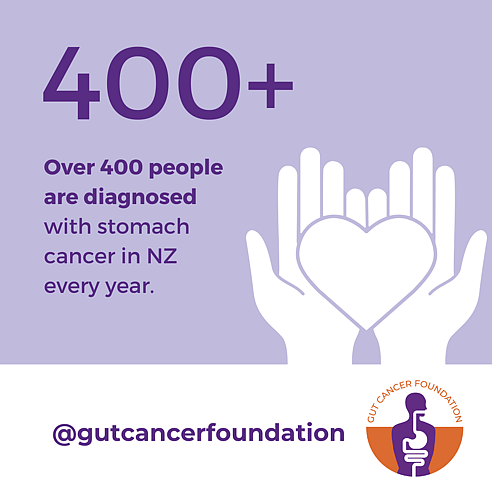
400+
Over 400 people are diagnosed with stomach cancer in NZ every year.
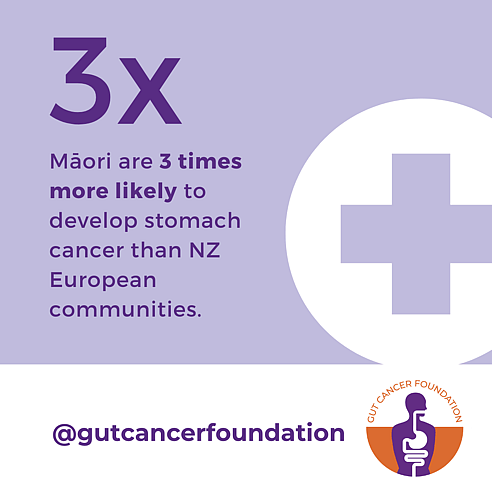
3x
Māori are 3 times more likely to develop stomach cancer than NZ European communities.
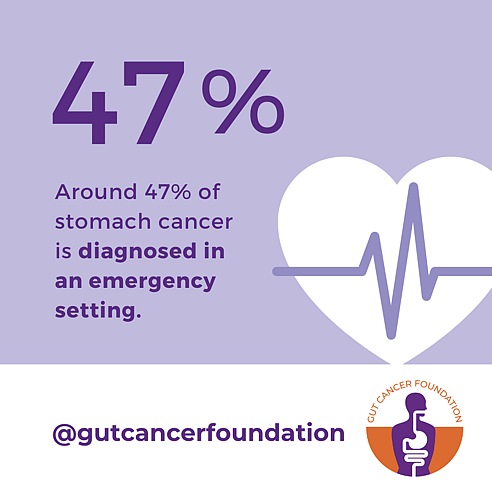
47%
Around 47% of stomach cancer is diagnosed in an emergency setting, often meaning late state diagnosis.
Join us
Show your support for getting Kiwis with stomach cancer equitable access to treatment, and stay informed on the latest research, funding, and advocacy news.


Symptoms & risks
Stomach cancer symptoms can be hard to spot and easily misdiagnosed. Awareness of the risks and signs can lead to earlier detection and better outcomes.
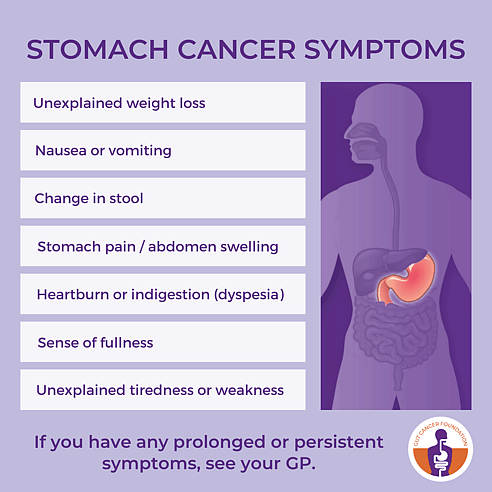
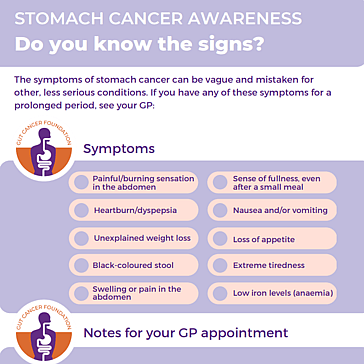
Symptoms
Extreme tiredness
Painful/burning sensation in the abdomen
Heartburn/dyspepsia
Black-coloured stool
Unexplained weight loss
Sense of fullness, even after a small meal
Nausea and/or vomiting
Loss of appetite
Swelling or pain in the abdomen
Low iron levels (anaemia)
Risks
Family history of stomach cancer
Family member who has had Helicobacter Pylori (H-Pylori)
If you have any of these symptoms for a prolonged period, or think you may be at risk, see your GP.
Know your whakapapa
NZ has a disproportionately large number of Hereditary Diffuse Stomach Cancer because the CDH1 gene has been found to be carried in a number of Māori whānau. If you are of Māori descent and have stomach cancer in your whānau, talk to your doctor about your whakapapa.
Sign up to receive the latest updates
Sign up to receive updates to you inbox on stomach cancer funding, research, news and advocacy, or join us on social media:
Personal journeys
Journeys of triumph, resilience and sadness told by patients and whānau affected by stomach cancer in New Zealand. If you, or someone you love been affected by stomach cancer we encourage you to share your story to help raise awareness.

ErinErin’s stomach cancer journey began after discovering a CDH1 gene mutation linked to Hereditary Diffuse Gastric Cancer (HDGC) in her family. Her story follows the life-changing decisions, treatment and recovery that came next.
Amy's BoysWhen Amy* saw a history of hereditary diffuse type gastric cancer (HDGC) in her whakapapa, she knew she had to advocate on behalf of her young boys.
CarlDon’t ignore that voice that says “that’s strange.” Carl's story shows that sometimes symptoms are not blindingly obvious.
ChrisChris was a fit, healthy 37 year old who passed away from stomach cancer in 2022. His sister Jess shares his story.

MartyConstant reflux and weight loss took Marty to the doctor in October 2024 just before his 40th birthday.
Support
My Care KIT
My Care KIT is a FREE resource to support you through your stomach cancer journey. Created with evidence-based information from stomach cancer experts, it is designed to help you understand your diagnosis, explore treatment options, and navigate the different stages of living with stomach cancer.
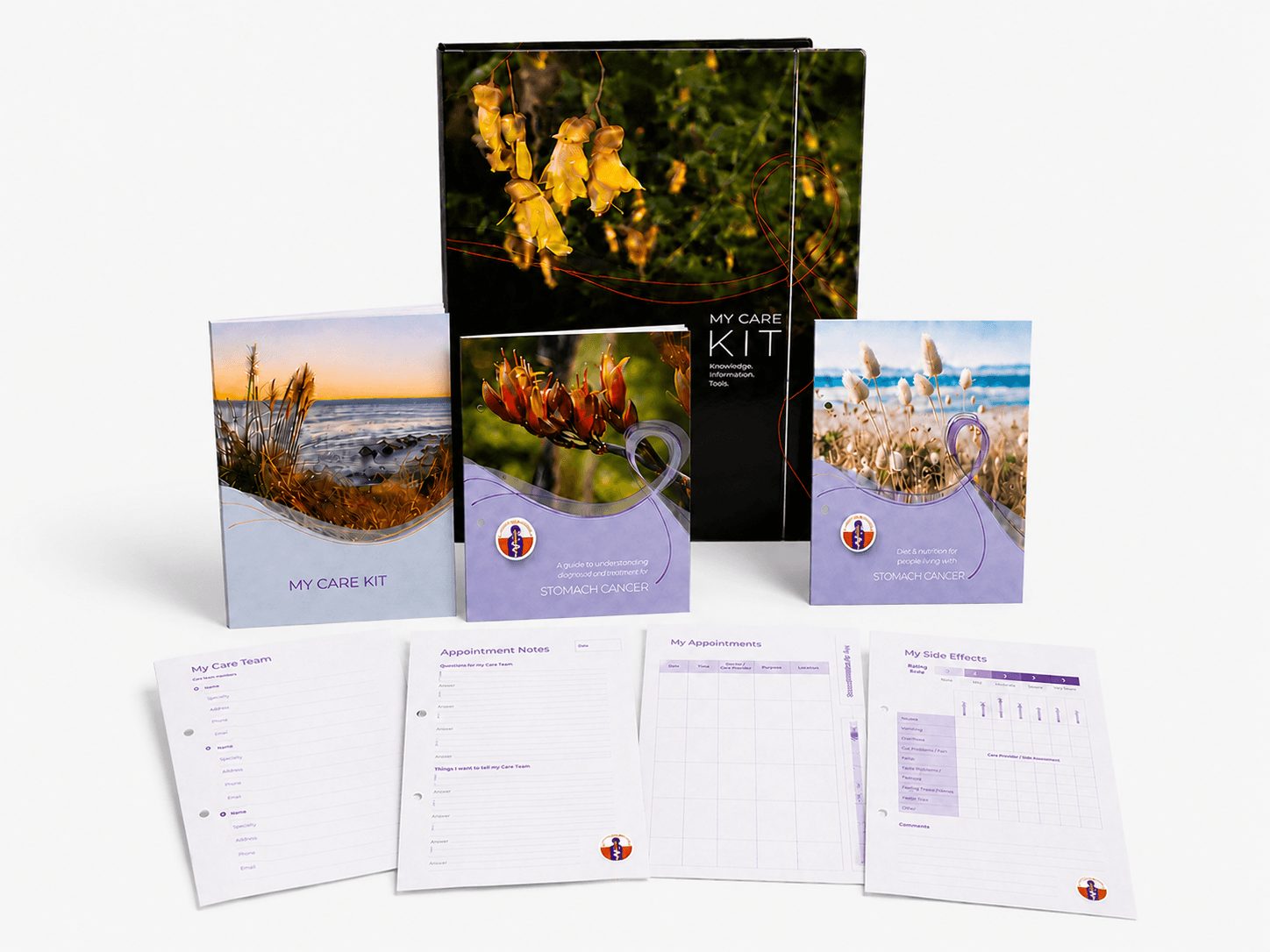
My Care KIT is available as a digital download or printed copy with free shipping throughout Aotearoa.
Refer yourself or whānau for support
Gut Cancer Foundation's support service is a free nurse-led, telehealth service to provide support for patients and whānau navigating a diagnosis of stomach cancer.
Whether you are worried about symptoms, calling to help a loved one or are post treatment and need support - please get in touch with us.
Healthcare professionals
If you are a health care professional looking to refer a patient or carer for stomach cancer support, please use the Refer a Patient button below. You can also refer patients directly to Gut Cancer Foundation via SR Referrals.
Resources
Download resources and share with your friends and whānau, or display in your workplace, clinic or community.
Social Tiles
Posters & PDFs
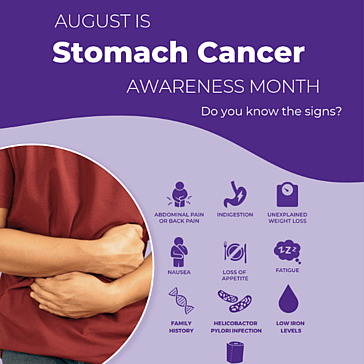
Awareness Month PosterA4 poster to display in your workplace or clinic. In Te Reo and English.
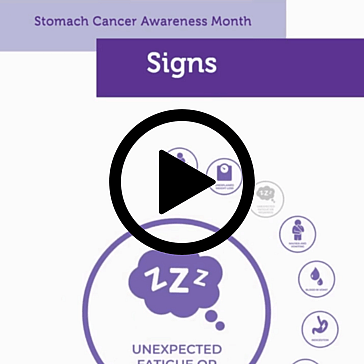
Email Signatures
How does Gut Cancer Foundation help?
Stomach cancer research, clinical trials and fellowships
Gut Cancer Foundation gives grants to New Zealand institutions from the funds we raise. They run clinical research, trials and fellowships with the goal of improving treatment for patients with gut cancers. We are currently supporting a number of stomach cancer studies and trials.
Understanding Māori perspectives: tissue being used for living tissue models
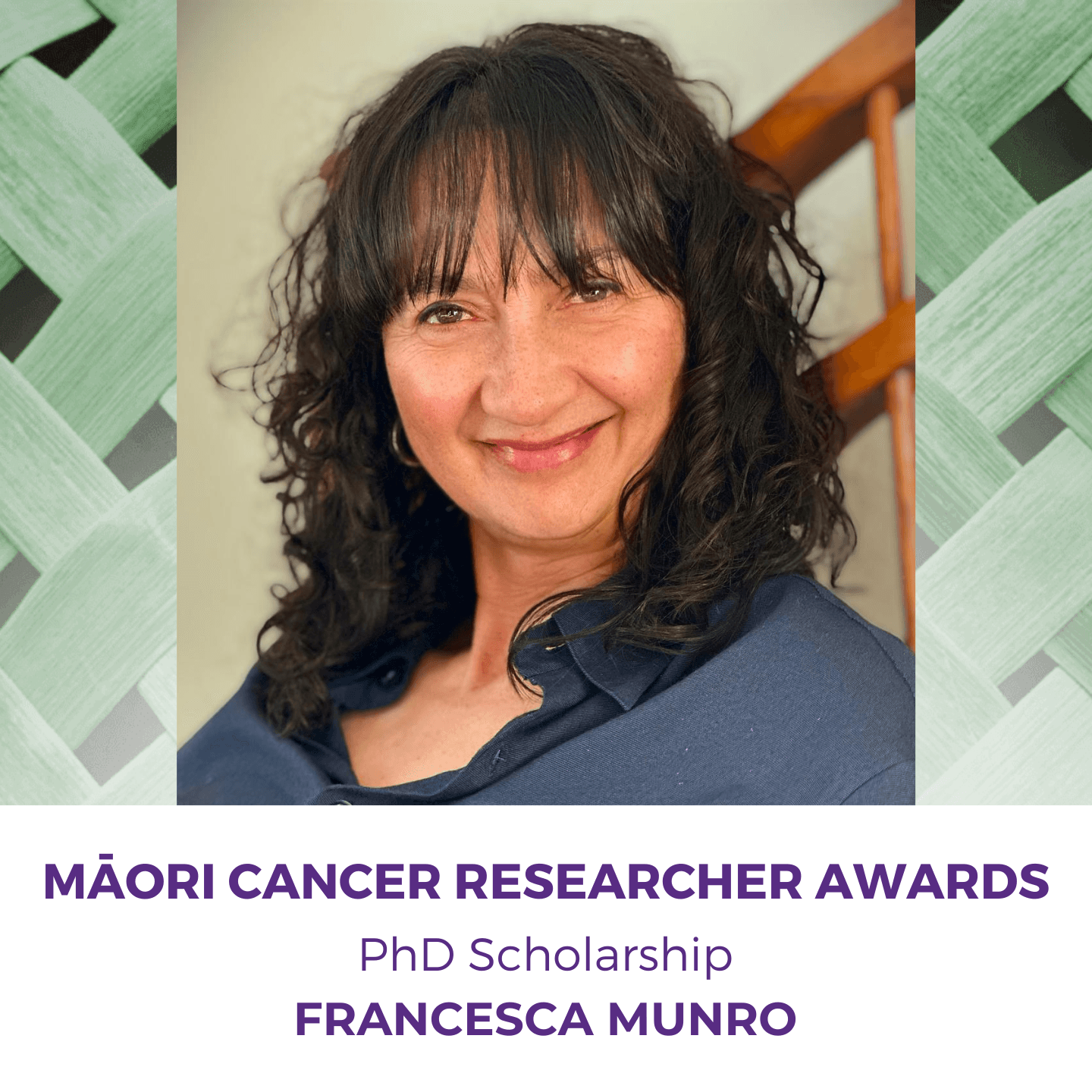
We’re proud to support Fran Munro (Ngāpuhi, Ngāti Moerewa, Ngāti Rangi, Ngāti Hine), one of five recipients of the Māori Cancer Researcher Awards, and one of two PhD candidates funded in partnership with Gut Cancer Foundation.
Fran will be working with Māori Health Providers and whānau Māori who have experienced gastric (stomach) cancer in Te Tai Tokerau Northland. They plan to discuss technologies that would help discern the various sub-types of gastric cancer and which treatments they respond to. These technologies include genetic sub-typing methods and using living human tissue to create models of the sub-types to test therapies.
Living with cancer: The carer's perspective
Being a carer can be incredibly rewarding but also exhausting and upsetting. We offer a range of information to help guide you as a carer so that you know what you can do to help, and resources to help you look after yourself too.
In this video, Trish Thomson shares her experience caring for her husband Greg who was diagnosed with oesophageal cancer over ten years ago. She offers honest and practical insights into how she supported him - and took care of herself so she could be there for him.
Donate to GCF today
We appreciate any support you can give to help fund clinical research and raise awareness of gut cancers.