October is Liver Cancer Awareness Month. This month, the Gut Cancer Foundation shines a light on liver cancer, raising awareness of the disease, the factors that can increase risk, the symptoms to be aware of and the importance of early detection.
Through research and innovation, awareness and education, advocacy and patient support, the Gut Cancer Foundation is working to improve outcomes for New Zealanders affected by liver cancer.
Key areas of focus for Liver Cancer Awareness Month 2026 include:
improving understanding of liver cancer symptoms and risk factors
highlighting the connection between hepatitis B and C infection and liver cancer
increasing awareness of the significant inequities in liver cancer incidence across Aotearoa
encouraging greater awareness of individual risk and the importance of appropriate testing and monitoring
sharing the experiences of people affected by liver cancer
connecting patients, whānau and carers with free specialist support and trusted information
promoting access to the Liver Cancer My Care KIT
highlighting research and clinical studies aimed at improving liver cancer treatment and outcomes
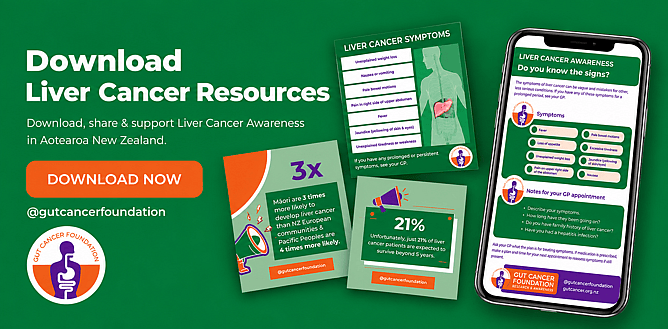
More than 360 people are diagnosed with liver cancer in Aotearoa New Zealand every year. Māori are three times more likely to develop liver cancer than New Zealand European communities, while Pacific peoples are four times more likely. Just 21% of people diagnosed with liver cancer are expected to survive beyond five years.
These statistics highlight the need for greater awareness of liver cancer risks and symptoms, alongside continued work to improve prevention, early detection, treatment and equitable outcomes across Aotearoa.
👉 View our Liver Cancer Awareness Month webpage
Recognising the symptoms of liver cancer
Liver cancer can be difficult to detect in its early stages, as symptoms often do not appear until the disease is more advanced. Symptoms can also be associated with other liver conditions, making awareness of both symptoms and individual risk factors particularly important.
Possible symptoms of liver cancer include:
fever
jaundice, including yellowing of the skin or eyes
excessive tiredness or weakness
loss of appetite
unexplained weight loss
nausea and/or vomiting
pain on the right side of the upper abdomen
pale bowel motions
Having one or more of these symptoms does not necessarily indicate liver cancer. However, new, persistent or unexplained symptoms should be discussed with a healthcare professional.
Our Liver Cancer Symptoms & Risks Checker is available to help record symptoms and support conversations with a GP.
Understanding the risk factors for liver cancer
There are some known risk factors that can increase the chance of liver cancer developing. Having a risk factor does not automatically mean that you will develop liver cancer, but they do increase the likelihood of it happening.
Knowing your risk factors and talking about them with your doctor may help you make more informed lifestyle and health care choices.
Some risk factors are environmental and within your control which is why it is important to understand what they are.
Risk factors include:
hepatitis B or C infection: this can lead to long-term (chronic) infection which can cause liver cancer
high alcohol consumption leading to liver cirrhosis
non-alcoholic fatty liver disease
obesity
rare genetic disorders including haemochromatosis and alpha 1-antitrypsin deficiency
type 2 diabetes
smoking tobacco
Liver cancer and hepatitis: what’s the link?
A key focus of Liver Cancer Awareness Month is increasing understanding of the connection between hepatitis B and hepatitis C infection and liver cancer.
Primary liver cancer occurs when the cancer arises from the liver cells. The most common type is called hepatocellular carcinoma (HCC). HCC usually arises in people who have had underlying liver disease for many years resulting in liver scarring (cirrhosis). In New Zealand, the most common causes of the underlying liver disease are hepatitis B, hepatitis C, and alcohol abuse.
An estimated 94,000 people in New Zealand are living with hepatitis B, and because the infection often causes no noticeable symptoms, many may be unaware they have it. GCF is proud to work alongside the Hepatitis Foundation of New Zealand to increase awareness of hepatitis B testing and its free long-term community monitoring programme.
Hepatitis C can also cause few or no noticeable symptoms while progressively damaging the liver. Health New Zealand's Stick it to hep C campaign promotes accessible testing and treatment for hepatitis C.
Increasing awareness of hepatitis, expanding access to testing and ensuring people living with chronic infection receive appropriate monitoring are important components of reducing the future burden of liver cancer.
Sharing the realities of liver cancer
Personal experiences provide an important insight into the realities of liver cancer, from diagnosis and treatment to clinical trials and ongoing uncertainty.
This Liver Cancer Awareness Month, the Gut Cancer Foundation acknowledges Rhys Drayson and Ken Chapman, who have generously shared their experiences of hepatocellular carcinoma.
Rhys contracted hepatitis C following a blood transfusion after an accident in 1982. Although he was later cleared of the virus, ongoing liver damage placed him at risk of HCC. Following his liver cancer diagnosis, Rhys went on to participate in a clinical trial involving the immunotherapy combination atezolizumab and bevacizumab. His participation was motivated not only by his own treatment, but by the potential for clinical research to help others in the future.
Ken was diagnosed with HCC in 2023 after routine blood tests identified abnormal liver markers. His journey has included surgery, consideration for liver transplantation and immunotherapy treatment, highlighting some of the complex treatment decisions and challenges that can follow a liver cancer diagnosis.
Gut Cancer Foundation is incredibly grateful to Rhys and Ken for sharing their journeys to help increase understanding of the realities faced by people living with liver cancer and their whānau.
Dedicated support for people affected by liver cancer
Gut Cancer Foundation’s free, nurse-led telehealth support service is available for people affected by liver and other upper gastrointestinal cancers.
The service supports patients, whānau and carers with concerns about symptoms and the early stages of diagnosis through treatment, recovery and life after cancer. Our dedicated Support Nurse can:
talk to you about symptoms that are concerning you
help guide you through the early stages of a diagnosis
suggest questions to ask your care team
answer any questions about the health system
support you with ways to deal with symptoms of your cancer and treatment
provide diet and nutrition support
highlight additional services based on your needs
provide resources to help inform you
Patients, whānau and carers can refer themselves to the service, while healthcare professionals can also refer patients directly.
Free My Care KIT for liver cancer
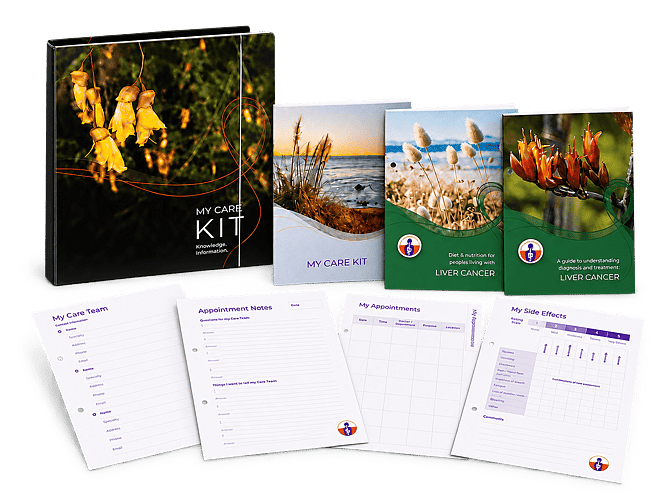
The Liver Cancer My Care KIT is also available free for patients, whānau, carers and health professionals throughout Aotearoa.
Part of the Gut Cancer Foundation's wider Upper GI Cancer Support Service, My Care KIT brings together trusted, evidence-based and practical information to help people better understand a diagnosis, prepare for appointments, explore treatment options and navigate the different stages of living with liver cancer.
My Care KIT is available as a free digital download or printed binder, with free shipping throughout New Zealand.
Supporting liver cancer research and clinical studies
Alongside awareness, advocacy and patient support, the Gut Cancer Foundation donors help fund research and clinical studies aimed at improving treatment and outcomes for people affected by liver cancer.
Current liver cancer projects supported by Gut Cancer Foundation include:
Tumour Microenvironment (HCC)
Monitoring Cardiotoxicity from 5-FU Chemotherapy
THYmine2
APEC
Supporting high-quality clinical research provides opportunities to improve understanding of liver cancer and develop better approaches to treatment and care for future patients.
Supporting Liver Cancer Awareness Month
Individuals, whānau, workplaces, healthcare professionals and communities can support Liver Cancer Awareness Month by:
learning about liver cancer, its symptoms and risk factors
increasing awareness of hepatitis and its connection with liver cancer
downloading and sharing liver cancer awareness resources
displaying awareness posters and resources in workplaces, clinics and community spaces
sharing the Liver Cancer Symptoms & Risks Checker
signing up for updates on liver cancer research, funding, news and advocacy
donating to help fund research, awareness, advocacy and patient support
Gut Cancer Foundation has created a range of social media tiles, posters, downloadable information and other resources to help communities across Aotearoa share trusted information throughout October:
👉 Download Liver Cancer Awareness Month resources
👉 Sign up for liver cancer updates
👉 Donate to support people affected by liver cancer
Every action counts 💚
Greater understanding of liver cancer risks, including hepatitis B and C, helps support earlier detection, appropriate monitoring and informed conversations about health.
Gut Cancer Foundation extends its sincere thanks to every patient and whānau member who has shared their experience, and to the healthcare professionals, researchers, partners, donors and supporters helping raise awareness this Liver Cancer Awareness Month. Your collective contribution is helping strengthen awareness, support research and improve care for people affected by liver cancer across Aotearoa.